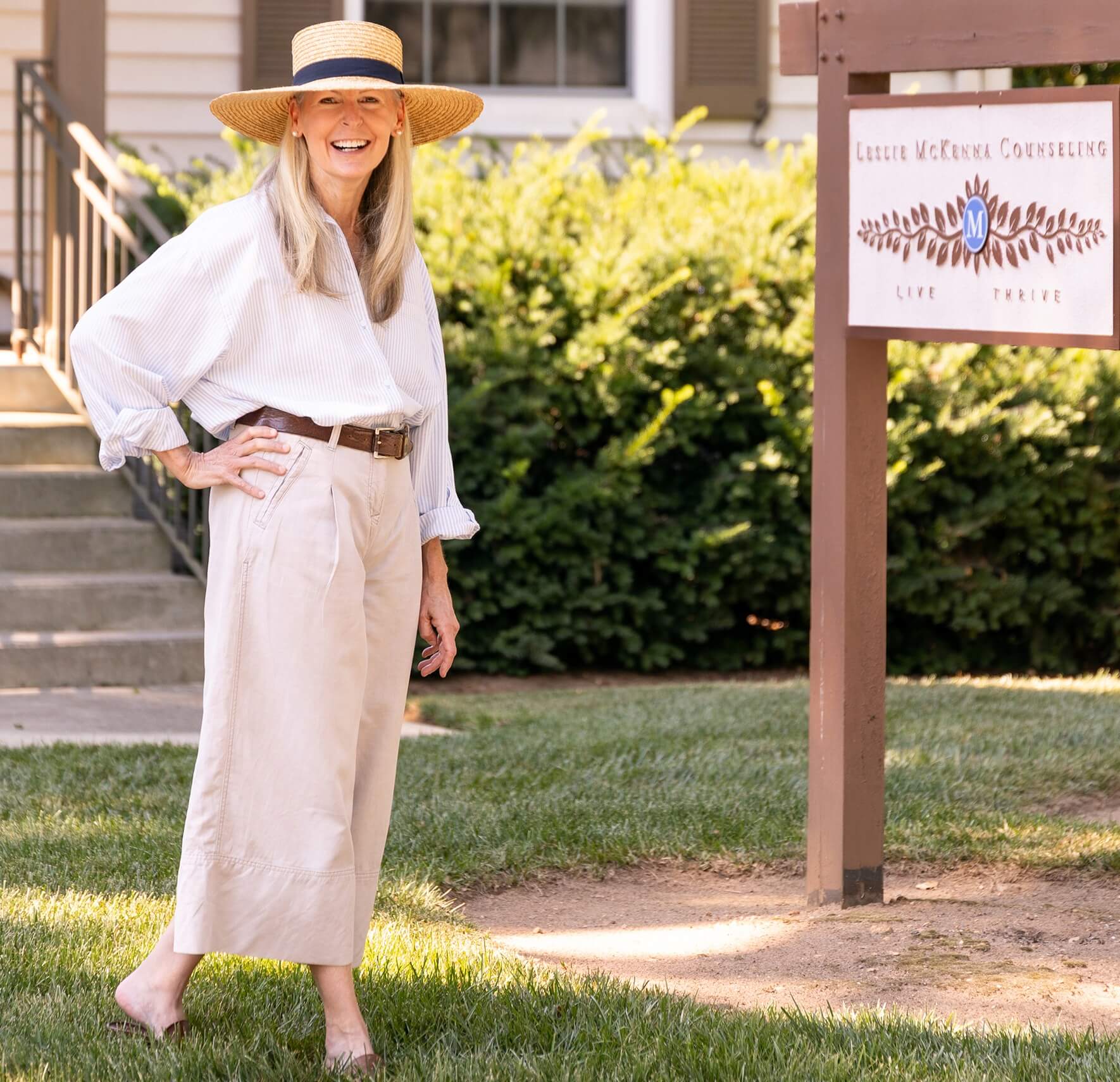
Frequently Asked Questions
If you are considering counseling, it is normal to have questions about what to expect, whether we’re a good fit, and how to get started.
I know reaching out can feel vulnerable, especially when you are thinking about discussing private or painful parts of your life. My goal is to make the process feel welcoming, understandable, and approachable rather than intimidating or overly clinical.
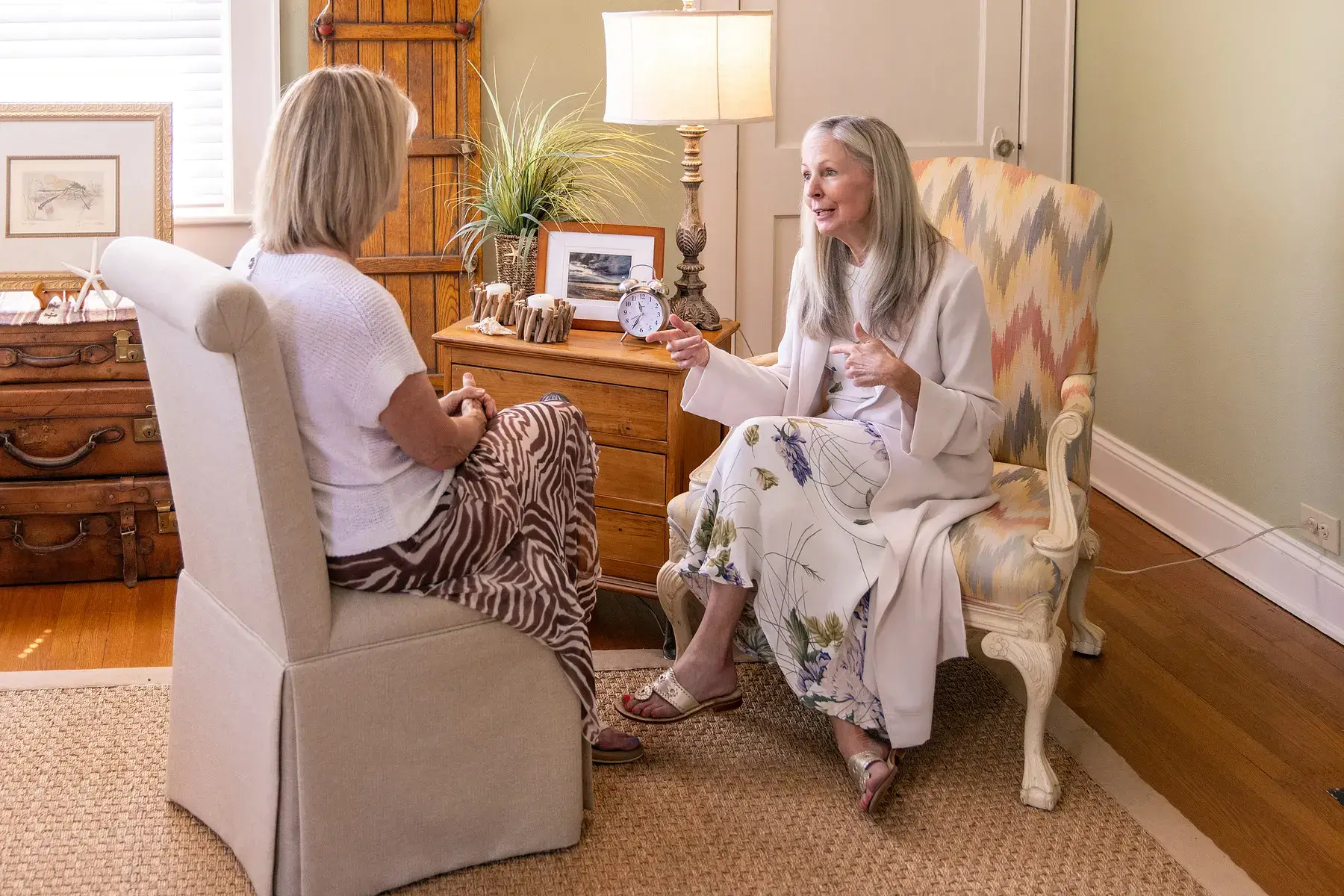
Get Answers to Your Questions
Women considering counseling with me at Leslie McKenna Counseling.
My counseling services, approach, first sessions, confidentiality, insurance, telehealth, locations served, and how to get started.
You do not need to know exactly what kind of counseling you need before contacting me.
Reach out to ask questions, check availability, or request an appointment.
Taking the First Step
That is completely okay. Many of the concerns that bring women to counseling do not fit neatly into one category.
Tell me what has been going on and what you would like support with. From there, we can talk about whether my experience and approach fit your needs.
I typically talk with a potential client for about 15 minutes before scheduling.
This gives us a chance to discuss what you are looking for, answer your questions, and determine whether we may be a good fit for one another.
Reaching out does not mean you have committed to counseling. It can simply be a first conversation.
Yes. I want you to have the information you need to decide whether working together feels right.
You are welcome to ask about my services, approach, availability, insurance, location, or what beginning counseling may look like.
I provide counseling for women experiencing concerns such as anxiety, depression, trauma and PTSD, body image and body shame, disordered eating, sexual abuse recovery, and other women’s mental health concerns.
I also want my practice to feel inclusive and welcoming. Whatever your race, sexuality, orientation, or belief system, I want you to know that you will be treated with care and respect.
If you are not sure where to begin, visit the Start Here page.
You can also explore Counseling Services, Who I Help, or My Approach depending on what you would most like to understand.
Support for Your Needs
Yes. I work with women who have experienced trauma and PTSD, and I have training in EMDR.
Trauma work can involve deeply personal experiences, and you do not have to tell me everything at once. We can approach the work carefully and build trust as counseling progresses.
Yes. Anxiety is an important focus of my practice.
We may look at patterns involving your thoughts, attention, brain, and nervous system and work on practical ways to interrupt patterns that contribute to anxiety.
That work may include learning how to bring your attention back to the present moment.
Yes. I work with women experiencing depression.
We may explore what is happening in your life as well as patterns involving thoughts, the brain, and the nervous system. From there, we can work together on skills and approaches that relate to the concerns bringing you to counseling.
Yes. Body image and body shame are important areas of my practice.
You may be struggling with how you think about your body, patterns of self-criticism, or feelings of shame that affect how you see yourself. We can explore these concerns together in counseling.
Disordered eating is one of the concerns I may address in counseling, although eating disorder treatment is not the primary focus of my practice.
If disordered eating is part of what you are experiencing, contact me so we can discuss your needs and determine whether my counseling services are an appropriate fit.
Yes. I work with women recovering from sexual abuse or assault.
I understand that these experiences can be deeply personal and difficult to discuss. My goal is to create space for you to approach this work with care, trust, and respect for your comfort level.
Working Together
Neuroscience is one of the areas I am most passionate about.
I help clients understand patterns involving thoughts, attention, the brain, and the nervous system. My goal is not to overwhelm you with complicated terminology. I want to explain these ideas in ways that feel relatable and useful in everyday life.
From there, we can work on recognizing patterns and practicing different ways of responding to them.
“Chatter Girl” is the informal name I use for the negative conditioned thought patterns that can run through our minds.
When you are caught up in those patterns, it can be easy to believe every thought that appears. The idea of Chatter Girl can help you begin separating who you are from the thoughts you are experiencing.
I may even encourage you to name your Chatter Girl. It is a nonclinical way of recognizing thought patterns that might otherwise feel powerful or overwhelming.
The first few sessions give us time to get to know one another, talk about what brought you to counseling, and help you become more comfortable with the process.
During the first session or two, I may talk a little more than you expect because I want you to understand how I approach counseling and feel comfortable in the space.
I may introduce concepts such as Chatter Girl early in our work. Later, I may talk more about brain structures or introduce practices such as meditation.
What we focus on will also depend on you, your needs, and what brings you to counseling.
Yes. Meditation is an important part of my approach.
I encourage clients to develop a meditation practice to work with attention and present-moment awareness intentionally outside our sessions.
You do not need any previous meditation experience before beginning counseling.
Yes, if spirituality is meaningful to you.
For example, I may introduce centering prayer with Christian clients who want to include that practice in their work.
At the same time, you do not need to follow any particular spiritual or religious belief system to work with me. I want my practice to welcome people from different backgrounds and belief systems.
Yes. Humor and playfulness are naturally part of the way I connect with people.
Counseling can involve serious and painful experiences, but that does not mean every moment has to feel heavy. When appropriate, there’s also room for laughter, warmth, and being human together.
Often, yes. I enjoy working with clients who are willing to engage with the ideas and skills we discuss and practice them outside our sessions.
You may begin noticing thought patterns, practicing ways to return your attention to the present, meditating, or using another skill we have explored together.
Planning Your Care
There is no single timeline that applies to everyone.
How long we work together will depend on what brings you to counseling, your goals, and how the process develops. We can continue discussing your progress and needs throughout our work together.
Contact me to ask about current availability or request an appointment.
You can also use that first contact to ask questions. You don’t have to be sure you want to schedule before reaching out.
Please get in touch with me for current fee and payment information.
I work with the following insurance companies:
Insurance participation, coverage, and benefits can vary by plan. Please contact me to confirm current participation and discuss your insurance before beginning counseling.
Privacy and Trust
Certain legal, ethical, safety, or reporting requirements may affect confidentiality.
I will review the confidentiality requirements that apply to my practice with you as part of the counseling process.
Please use the contact form for general questions about appointments, availability, services, or getting started.
Do not use it to send urgent, crisis-related, or highly sensitive information.
No. Contacting me or submitting a website form does not by itself establish a therapeutic relationship.
The counseling relationship begins through the appropriate intake, disclosure, and consent process.
No. Please do not use the website or contact form if you need immediate crisis or emergency support.
If you are in immediate danger or experiencing a mental health emergency, call 911 or go to the nearest emergency room.
Connecting With Care
I serve women in several communities throughout western North Carolina, including:
If you live in one of these communities or a nearby area, contact me to ask about current availability, office location, and whether I can provide counseling services where you live.
That depends on professional licensing requirements and the state where you are physically located.
Please contact me before scheduling so I can confirm whether I can provide counseling services in your location.
Where to Look for More Information
Not sure where to begin? Visit Start Here for a simple overview of how to take the first step.
Explore Start HereLearn more about the concerns I work with and the counseling services available through my practice.
Explore Counseling ServicesLearn more about the women, concerns, and life experiences I support through counseling.
Explore Who Leslie HelpsLearn more about how neuroscience, mindfulness, present-moment awareness, practical skills, collaboration, and humor can be part of our work together.
Explore My ApproachExplore more of the perspectives and practices that may inform our work together.
Explore Healing ApproachLearn more about counseling for women in Hickory, Conover, Newton, Morganton, Statesville, Charlotte, Lenoir, and surrounding North Carolina communities.
Explore Areas ServedAsk about availability, insurance, services, location, or what beginning counseling might look like.
Contact Me TodayResources for Those in Crisis
My website and contact form are not intended for emergency or crisis support.
If you are experiencing a mental health emergency or are in immediate danger, call 911 or go to the nearest emergency room.
If you are in emotional distress or experiencing a crisis in the United States, you can call or text 988 for support through the 988 Suicide & Crisis Lifeline.
Information on this website is educational and does not replace counseling, emergency care, or other appropriate professional services.
Contact Me for More Information
You do not need to understand everything about counseling before you reach out.
If you are wondering whether I am the right counselor for you, please contact me. We can talk about what you are looking for, answer your questions, and consider whether working together may be a good fit.